March 27, 2026Share
Why You Need a GSM Scale?
In our previous deep dive, we explored why grammage is the “lifeblood” of production—it dictates your costs, quality, and customer trust. But knowing that grammage matters is only the first step; the real challenge lies in how you measure it.
To stop relying on “feel” and start using precise data, you need a reliable testing tool. However, with different technologies available, the question is no longer if you need a GSM scale, but which specific type fits your unique workflow.
Traditional vs. Smart GSM Scale: At a Glance
| Feature | 🔧 Traditional GSM Scale | ⚡ Smart GSM Scale |
|---|---|---|
| 📸 Product Image | 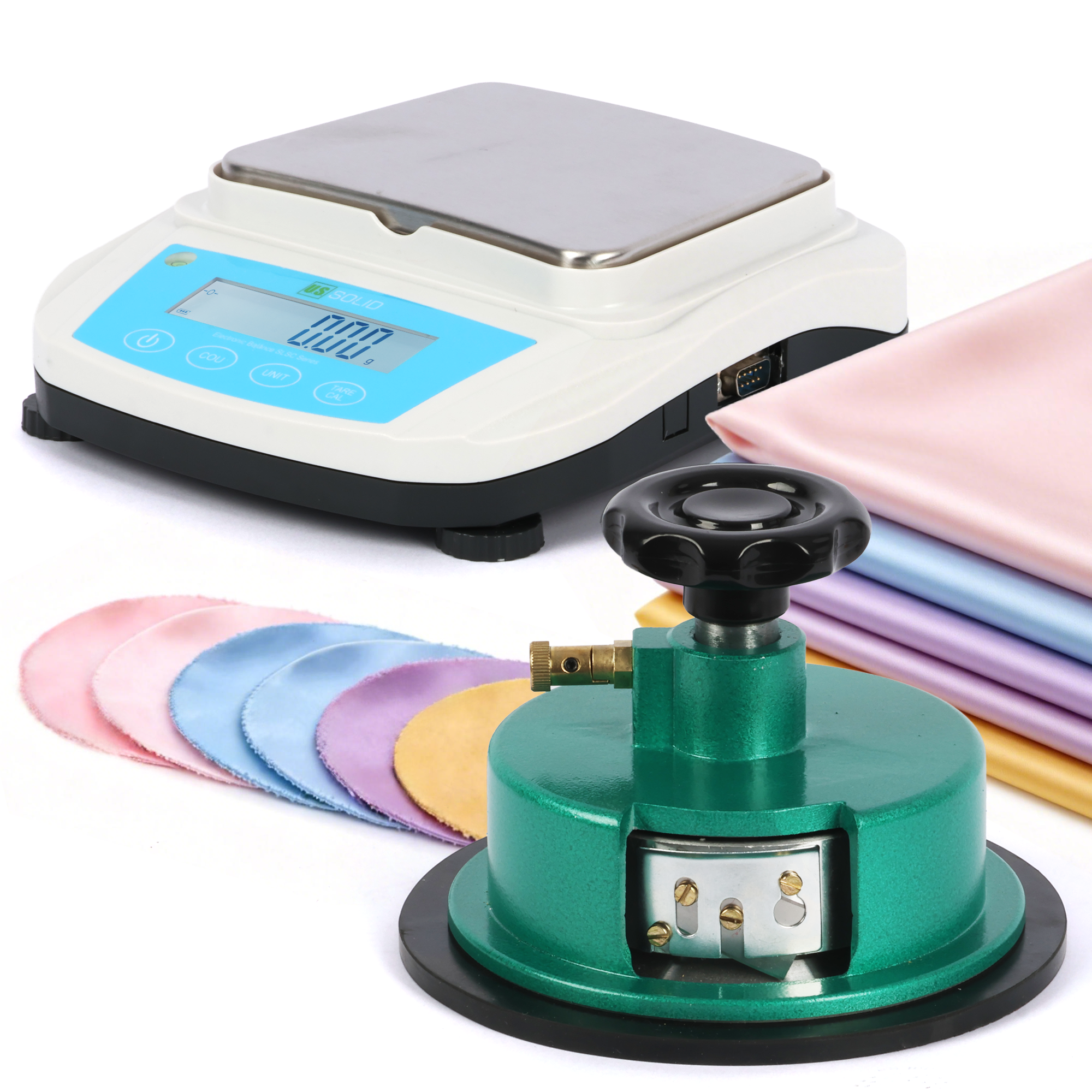 | 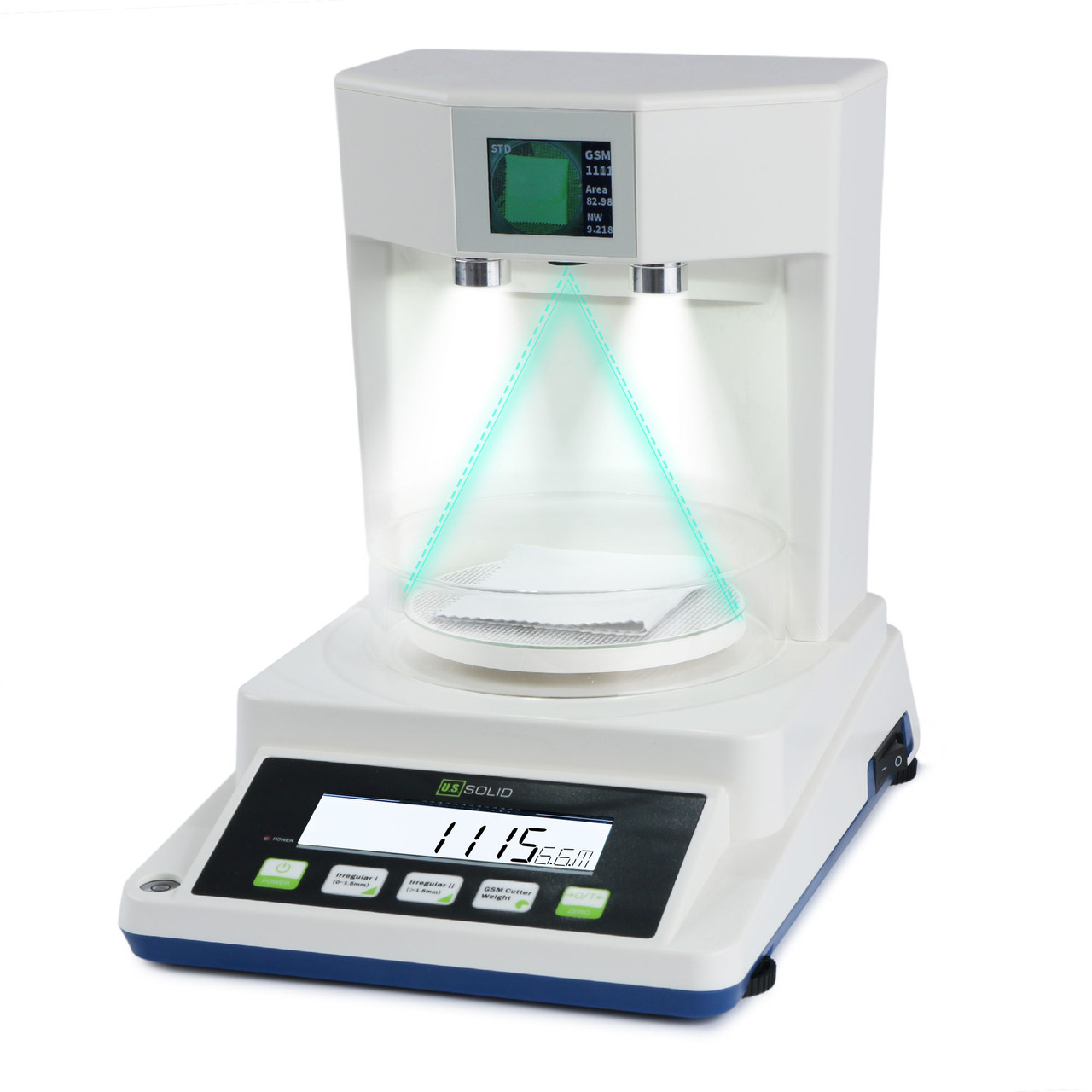 |
| 💰 Budget | ✅ $129.99 | $458.00 |
| ✂️ Sample Requirement | Standard cut sample (100 cm²) | ✅ Any shape — no cutting needed |
| 🔢 Calculation | Manual | ✅ Automatic (3 seconds) |
| 📊 Data Traceability | Limited | ✅ Full (Excel export, ERP) |
| 📏 Max Material Thickness | ✅ Up to 3mm | Standard fabrics |
| ⚖️ Weighing Capacity | ✅ 1200g | 200g |
| 🏆 Best For | Small batches, occasional testing | High-volume QC, export orders |
Option 1: Traditional Fabric GSM Scale
Traditional Fabric GSM Scale = Standard Sampler + Electronic Balance
The traditional approach requires cutting standard round samples with a fixed area (commonly 100 cm²), followed by manual sampling, manual weighing, manual recording, and manual GSM calculation.
Key Specifications:
- Sampler: Cuts materials up to 3mm thick with 100 cm² cutting area
- Connectivity: RS232 interface for printer or computer connection
- Capacity: 1200g / 0.01g readability
✅ Advantages: Low cost, easy to use, handles thicker materials (up to 3mm), higher weighing capacity.
⚠️ Limitations: Time-consuming, material-wasting (samples destroyed during cutting), error-prone, limited data traceability.
🎯 Best for: Small batches, occasional testing, thicker materials, low data management requirements.
Option 2: Smart GSM Tester
Smart GSM Tester = High-precision Weighing + Intelligent Calculation + Data Management + Easy Operation
It solves all the pain points of traditional models with advanced automation and intelligence. Represents the cutting edge of fabric testing technology.
Key Specifications:
- Camera accuracy: 0.06 mm/pixel for automatic sample identification
- Repeatability: ±0.002g
- Environmental protection: Includes windshield to minimize interference
Smart Features That Solve Traditional Pain Points:
✓ No Standard Sample Required
Works with irregular shapes, leftover materials, and small pieces. The HD camera automatically identifies the sample area and calculates GSM. No cutting needed—zero material waste.
✓ Automatic Calculation in 3 Seconds
Camera recognizes the area or you can enter it directly. No manual calculations required.
✓ Automatic Data Storage & Excel Export
Batch, time, operator, and results are fully recorded for easy quality inspection and compliance documentation.
✓ Connectable to PC, Printer & ERP
One-step setup for factory digitalization and foreign trade inspection reports. Seamlessly integrates into your quality management system.
✓ Higher Stability & Accuracy with Error Prevention
Auto-tare, calibration, alarms, and multi-point averaging reduce human error. Superior ±0.002g repeatability ensures consistent, reliable results.
✅ Best for: High-frequency testing, factory QC, export orders, mass production, compliance & traceability.
Which One Should You Choose?
🔵 Choose the Smart GSM Scale if you:
- Test GSM more than 10 times per day
- Handle export orders, brand orders, or e-commerce quality control
- Need inspection reports & data traceability
- Want to reduce waste, improve efficiency, and lower human error
- Are moving your factory/lab toward digitalization
- Work with irregular samples or leftover materials
If you meet 2 or more of these criteria, a Smart GSM Tester is almost a must-have.
🟢 Choose the Traditional Electronic GSM Scale if you:
- Have a tight budget but need professional accuracy
- Test occasionally or in small batches
- Work with thicker materials (up to 3mm) requiring higher capacity (1200g)
- Follow standardized testing protocols requiring physical cut samples
- Need RS232 connectivity for basic data logging
Real-World ROI Comparison
Example: Testing 20 samples per day
| 📊 Metric | 🔧 Traditional GSM Scale | ⚡ Smart GSM Scale |
|---|---|---|
| ⏱️ Time per sample | ~4 minutes | ✅ ~3 seconds |
| 📅 Daily time (20 samples) | 80 minutes | ✅ 1 minute |
| ♻️ Material waste | ❌ Yes (cut samples) | ✅ Zero |
| 💰 Time saved per year | — | ✅ 340+ hours |
For high-volume operations, the Smart GSM Scale pays for itself through efficiency gains and waste reduction.